


🔄 Cập nhật lần cuối: 11/07/2026
Why this matters: The Immigration Department approves the vast majority of e-visas, but when one is rejected, it's almost always due to a small, preventable mistake. The fee is non-refundable, and a single rejection can derail your flights. Here are the 7 most common — and how to dodge each one.
3 ground rules
Before the details, remember three things that shape every application:
- Accuracy beats speed. The system cross-checks what you type against your passport scan — one character off can trigger manual review or rejection.
- There's no formal appeal. If rejected, you reapply after fixing the cause — there's no "appeal."
- The fee is non-refundable. So double-checking before you pay is always cheaper than reapplying.
Mistake 1 — Applying on an unofficial website
This is the costliest one. Copycat middleman sites can overcharge you, issue invalid documents, or take your money.
How to avoid it: apply only on the Immigration Department's official portal (for example evisa.gov.vn). Check the domain is a genuine government site (.gov.vn). If you'd rather not do it yourself, use a reputable service that checks your file before submitting.
Mistake 2 — Details that don't match your passport
This is the most common rejection reason. Your name on the application must match your passport character for character (especially the MRZ at the bottom of the bio page): swapping surname/given name, dropping a middle name, adding spaces or hyphens, mistyping the passport number, choosing the wrong nationality.
How to avoid it: open your passport and copy from it — don't fill from memory. Enter the surname/given-name order exactly as the form asks.
Mistake 3 — Wrong date format
The form uses dd/mm/yyyy, but many people habitually write mm/dd/yyyy. Entering 05/03/2026 meaning 5 March can be read as 3 May, giving you the wrong visa window. This applies to date of birth, intended entry and exit dates.
How to avoid it: check every date field twice, confirming day-then-month order.
Mistake 4 — Non-compliant photo & passport scan
Photos cause more rejections than anything else. Common errors: coloured/patterned background, glasses or a hat, an old photo, a cropped image from another photo, or a screenshot. Passport scans also trip people up: uploading the cover instead of the bio page, tilted/dark/glare images, or cutting off the MRZ.
How to avoid it:
- Portrait: white background, clear face, taken within 6 months, no glasses/hat, JPG under 2MB (avoid PNG/PDF).
- Passport scan: capture the full bio-data page, with both MRZ lines visible, no glare, not tilted.
Mistake 5 — A passport close to expiry
Your passport must be valid at least 6 months from your entry date, ideally with blank pages.
How to avoid it: take your intended entry date and add 6 months; if your passport expires before that, renew it before applying.
Mistake 6 — Applying too late & not checking the result
Processing usually takes about 3 working days, but can stretch (up to ~15 working days) in busy periods or around holidays (like Tết). Crucially, the system does not email you the result — you must check your status on the portal using your registration code, email and date of birth. If they request an amendment (a new photo, a name clarification) and you don't respond, your application can be "silently" rejected.
How to avoid it: apply early (at least a week before your trip, earlier is better), avoid holiday clusters, and check your status daily from day three.
Mistake 7 — Applying from inside Vietnam / an entry point that doesn't accept e-visas
E-visas must be applied for from outside Vietnam; applications filed while you're inside the country can be rejected. Also, not every gate accepts e-visas.
How to avoid it: apply before you reach Vietnam, and make sure the gate you'll actually enter through is on the list of e-visa-accepting checkpoints (expanded to dozens of points in 2026).
If you do get rejected?
There's no mandatory waiting period — you can reapply straight away. But you must fix the cause; resubmitting the same thing usually fails again. If your flight is close or you can't identify the cause, consider a specialist to handle it.
Note: Information is current at publication; rules and processing times can change. Check the Immigration Department's official portal before applying. ViEntry is a platform connecting users with independent operators; it is not an immigration authority and does not provide legal advice.
Sources
- Guidance to use the official portal and document standards: the Immigration Department; the E-Visa portal
evisa.gov.vn. - Synthesised from reputable 2026 news and visa-service reporting on why e-visas get rejected.
Let ViEntry handle your E-Visa
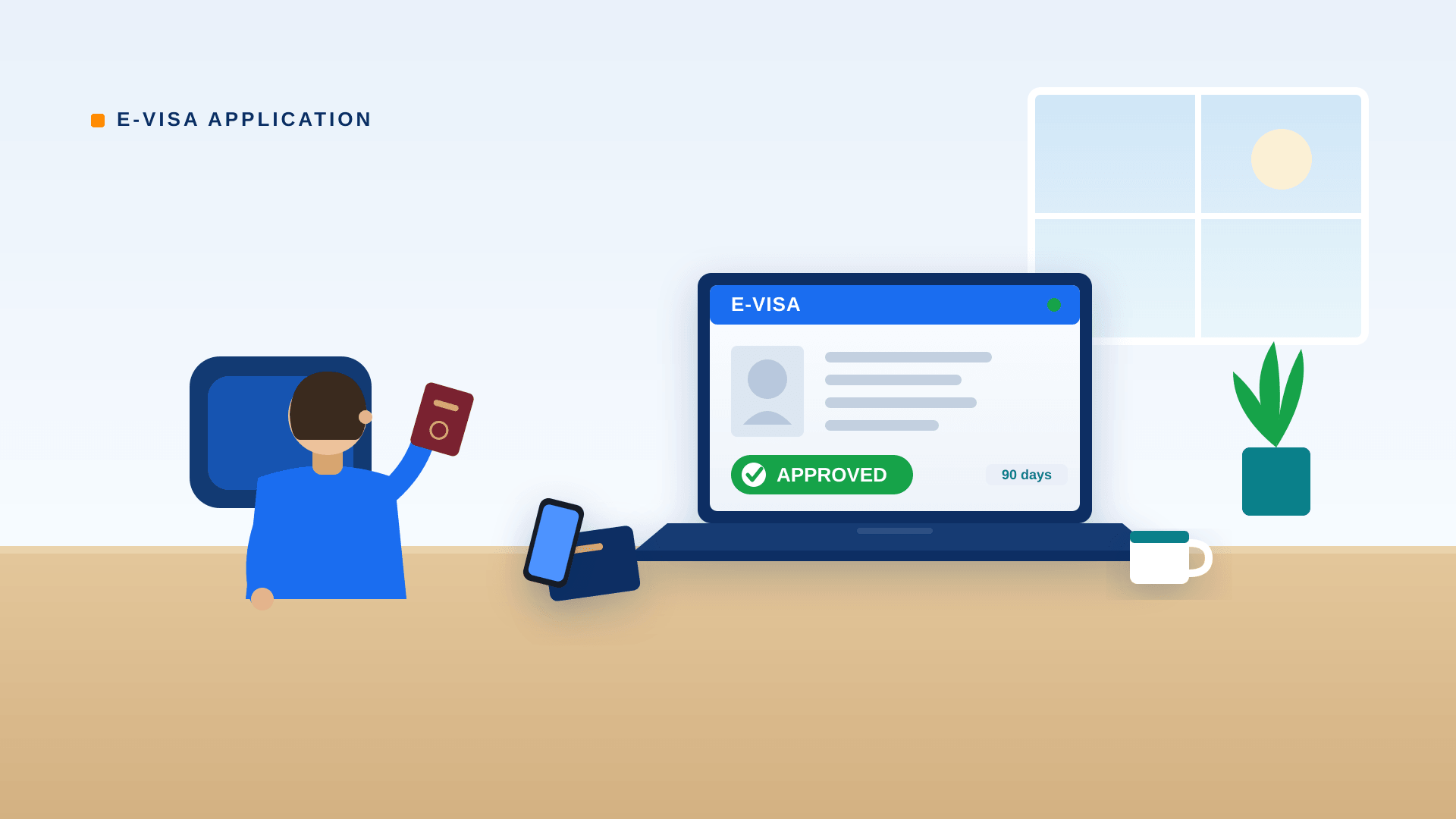
Worried about slips? ViEntry supports 90-day E-Visa applications: checking your details and photo before submission, tracking status, and expediting when needed. Many travelers book the E-Visa + eSIM combo to arrive with both paperwork and data ready. Not sure which type you need? Use the free Advisor.
👉 Apply for an E-Visa or ask about the combo: Telegram @vientry_support · WhatsApp +84 963 091 001 · Hotline 0963 091 001.